Chief Medical Officer &
Deputy Chief Medical Officer
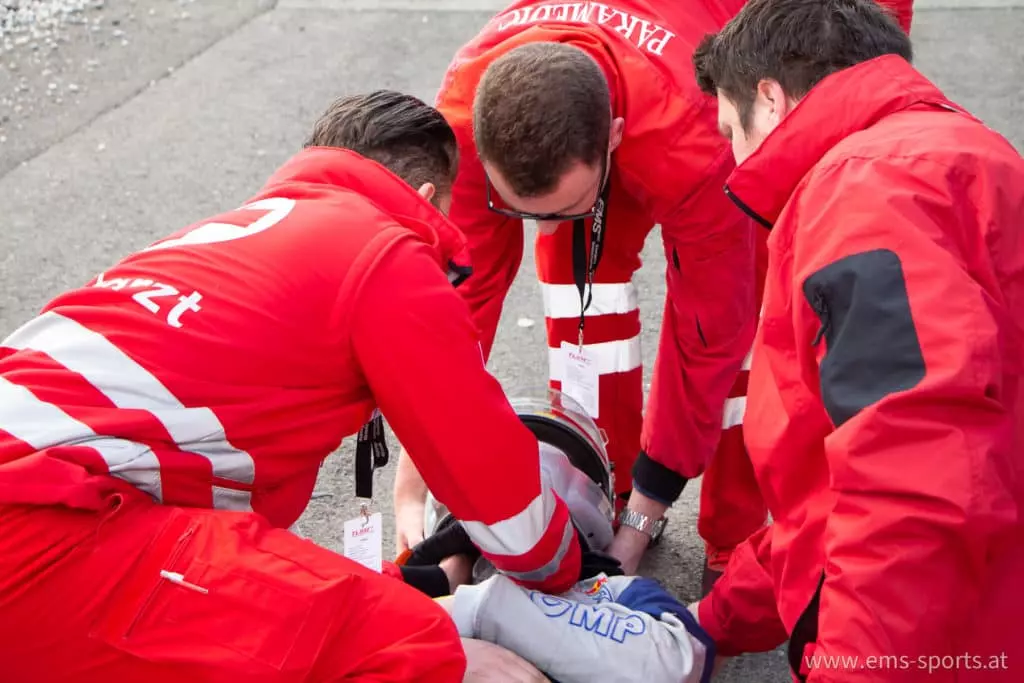
Chief Medical Officer
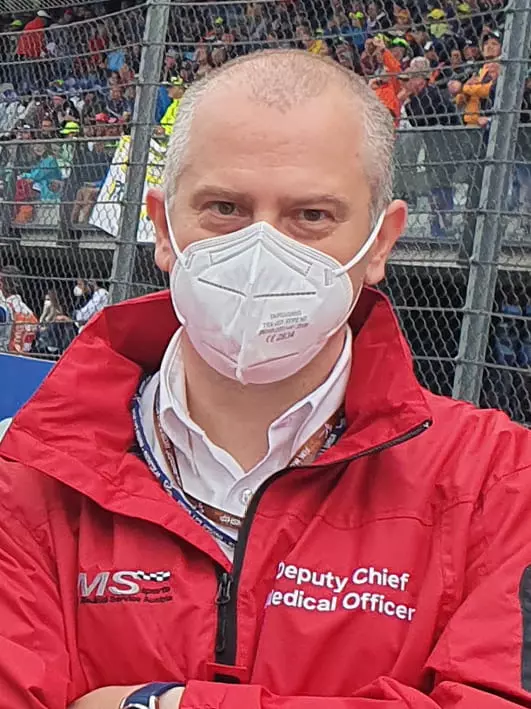
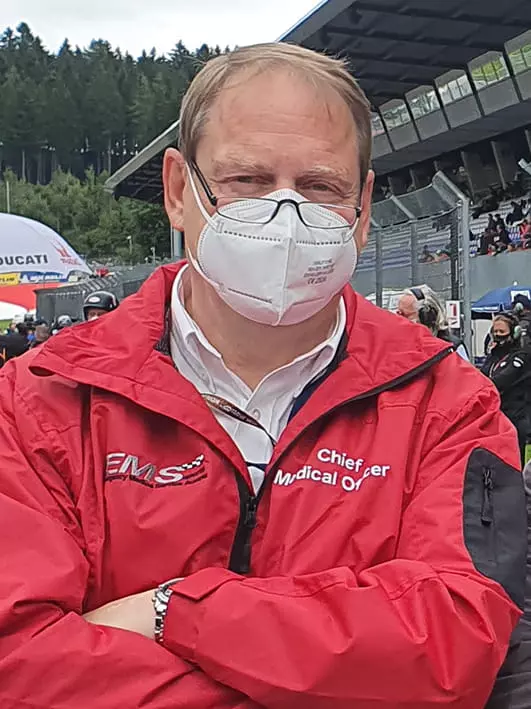
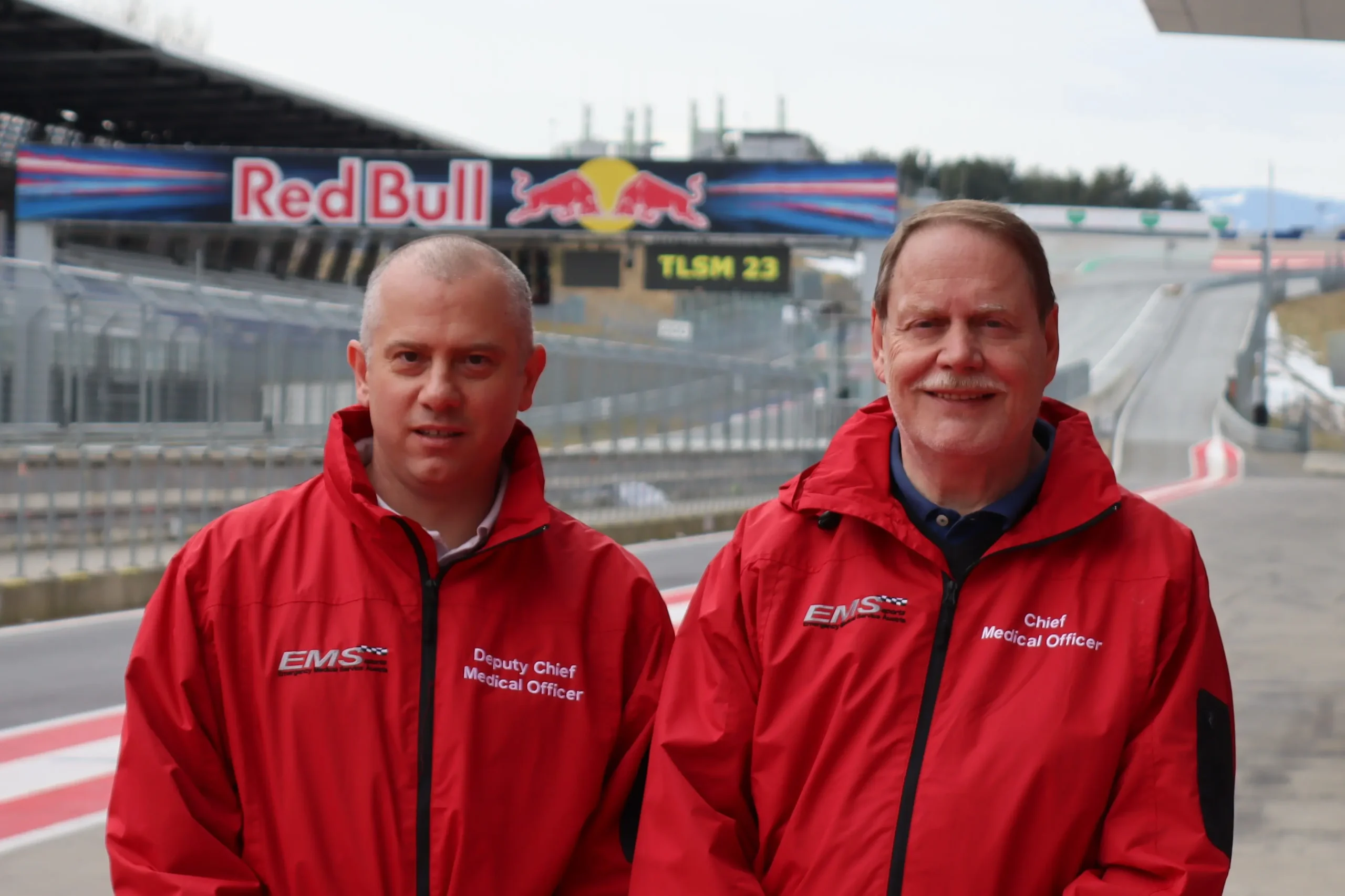
The Chief Medical Officer (CMO) is responsible for the management and organization of all medical operations elements at an event. In order to act as CMO at FIA or FIM events, the CMO must be proposed by the National Sporting Authority (NSA) and accredited by the Medical Commission (FIA, FIM).
The CMO prepares the medical deployment- and intervention-plan and determines the number of personnel and elements.
Other duties of the CMO include:
- Presence in Race Control during practice and races
- Reentry examinations of injured participants (fit to race)
- Audit of the Extrication Exercise
- Medical Inspection before the start of the event
- Control and coordination of the emergency elements in case of an accident
- Determination of the destination hospital and organization as well as determination of the means of transport
- Contacting authorities and external emergency services in case of a major accident
- and many more. (see FIA Medical Code, Annex H; Medical Code FIM)
Notärzte und Fachärzte
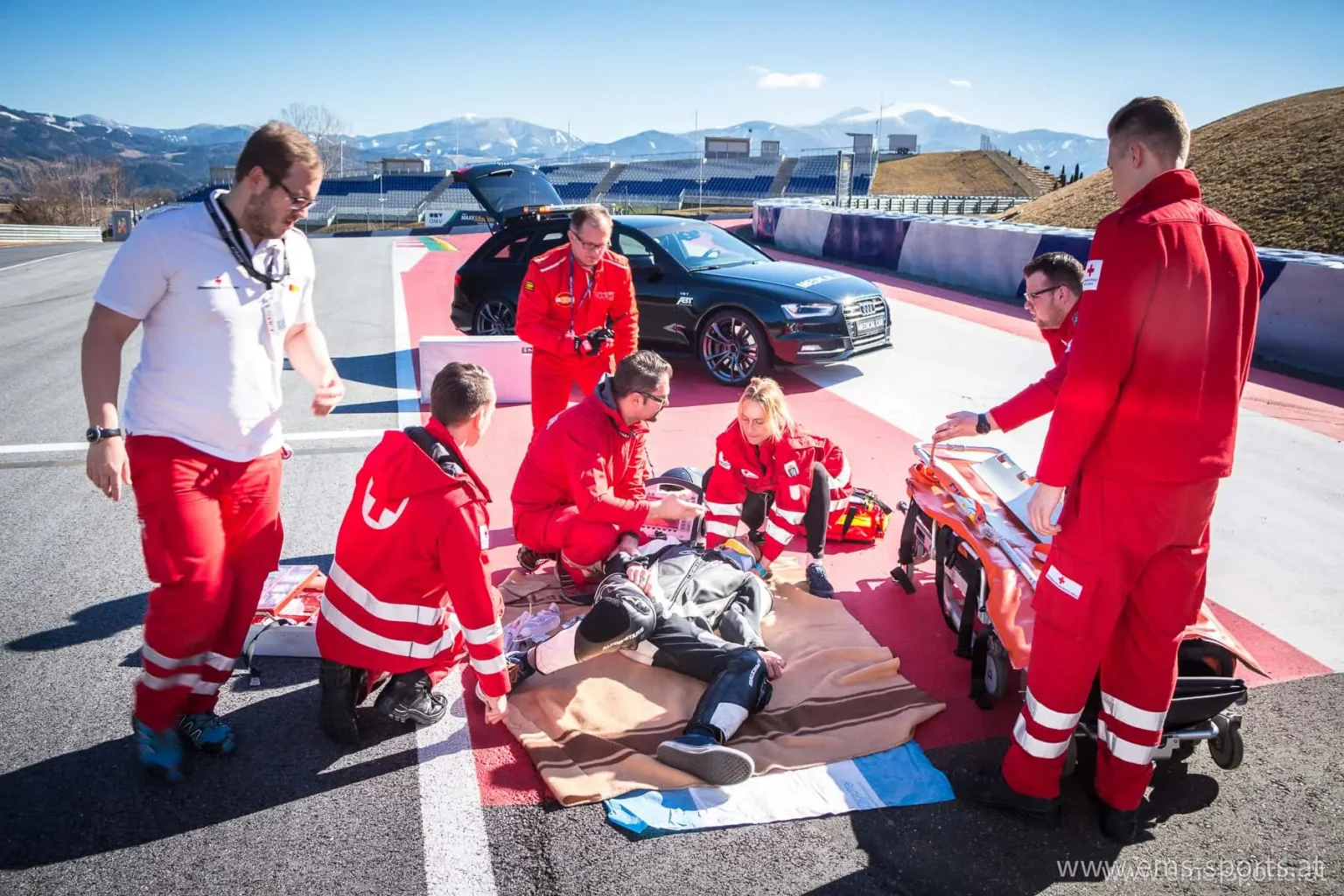
Medical personnel represent the highest level of qualification in the care of injured motor sportsmen. Due to the high-velocity trauma and the associated injuries, optimal pre-clinical care of the injuries can usually only be carried out by an experienced emergency physician.
Most of the physicians working at Emergency Medical Service sports Austria are emergency physicians who also perform this activity as part of their profession and thus have sufficient experience in the treatment of a wide variety of injury patterns. At major events, specialists (anesthesiologists, surgeons, radiologists, etc.) are also present to practice their special skills (e.g. ultrasound examinations) at the Medical Center.


DGKP | Notfallsanitäter | Sanitäter
Diplomierte Gesundheits- und Krankenpflegepersonen (DGKP) werden im Medical Center eingesetzt. Hier werden Anästhesie-DGKP, OP-DGKP und Ambulanzschwestern benötigt um die Ärzte bei ihren Aufgaben zu unterstützen.
Notfallsanitäter (NFS) Die Aufgabe der Notfallsanitäter ist neben den allgemeinen Aufgaben eines Sanitäters vor allem die Unterstützung des Notarztes. Hierfür sind sie besonders ausgebildet. Rettungssanitäter (RS) Ihre Aufgabe ist die Betreuung des Patienten während des Transportes und die Durchführung lebensrettender Sofortmaßnahmen bis zum Eintreffen des Notarztes.Medical Car Drivers
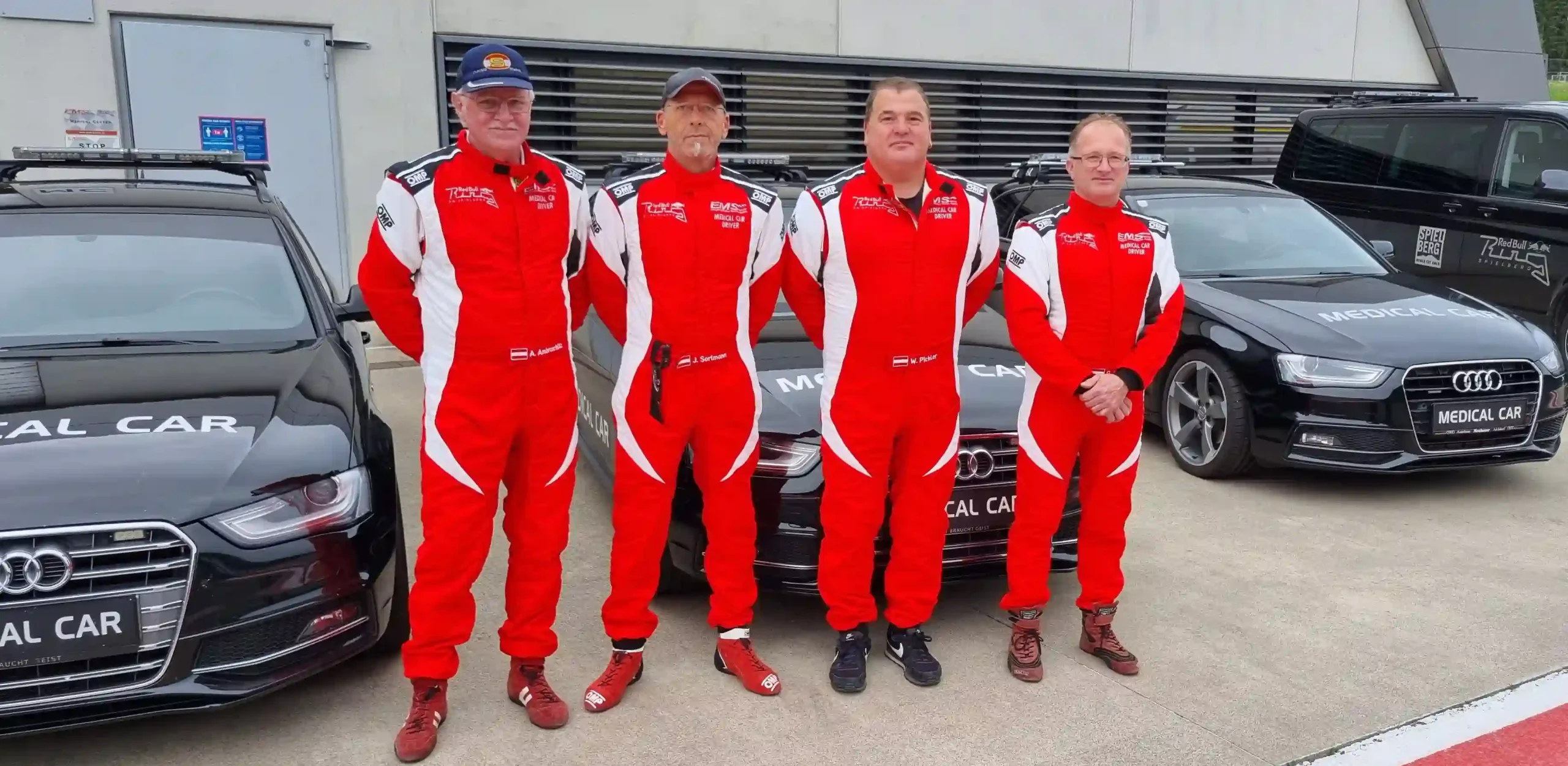
The Medical Car Drivers guarantee the fastest possible contact of emergency doctors with injured race drivers or track marshals during motorsport events.
They are stationed in the pit lane during the race weekend and are constantly on standby during practice sessions and the race to quickly reach the scene of an accident if necessary in the event of a serious accident. The vehicles are equipped with complete emergency equipment for the treatment of heavily injured persons.


Chief Medical Officer

Deputy Chief Medical Officer
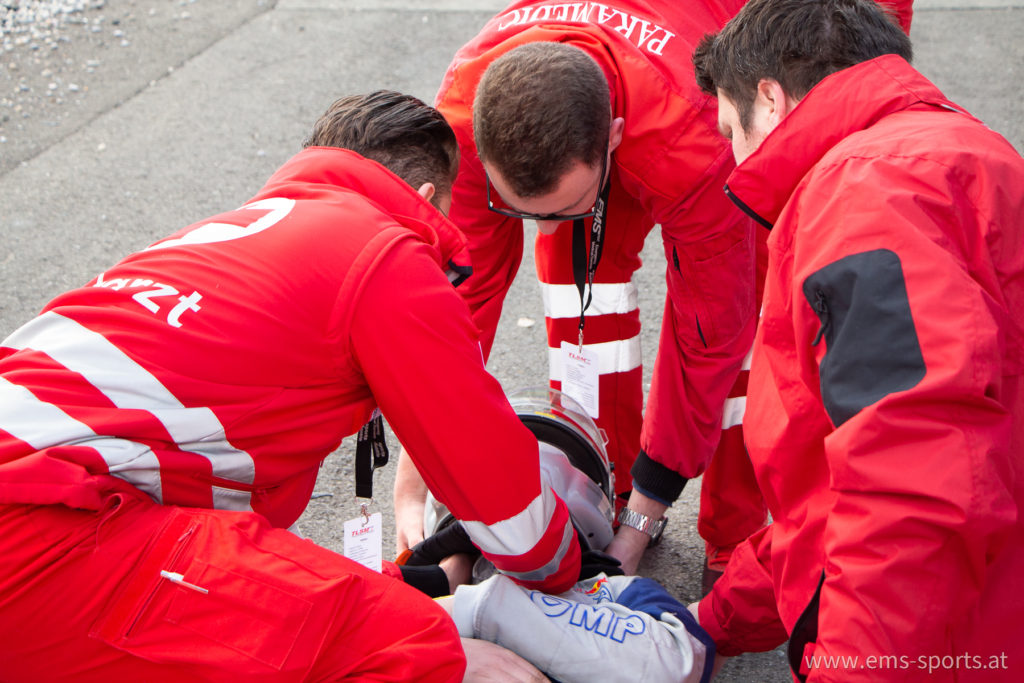
Chief Medical Officer
The Chief Medical Officer (CMO) is responsible for the management and organization of all medical operations elements at an event. In order to act as CMO at FIA or FIM events, the CMO must be proposed by the National Sporting Authority (NSA) and accredited by the Medical Commission (FIA, FIM).
The CMO prepares the medical deployment- and intervention-plan and determines the number of personnel and elements.
Other duties of the CMO include:
- Presence in Race Control during practice and races
- Reentry examinations of injured participants (fit to race)
- Audit of the Extrication Exercise
- Medical Inspection before the start of the event
- Control and coordination of the emergency elements in case of an accident
- Determination of the destination hospital and organization as well as determination of the means of transport
- Contacting authorities and external emergency services in case of a major accident
- and many more. (see FIA Medical Code, Annex H; Medical Code FIM)

Notärzte und Fachärzte
The Medical personnel represent the highest level of qualification in the care of injured motor sportsmen. Due to the high-velocity trauma and the associated injuries, optimal pre-clinical care of the injuries can usually only be carried out by an experienced emergency physician.
Most of the physicians working at Emergency Medical Service sports Austria are emergency physicians who also perform this activity as part of their profession and thus have sufficient experience in the treatment of a wide variety of injury patterns. At major events, specialists (anesthesiologists, surgeons, radiologists, etc.) are also present to practice their special skills (e.g. ultrasound examinations) at the Medical Center.
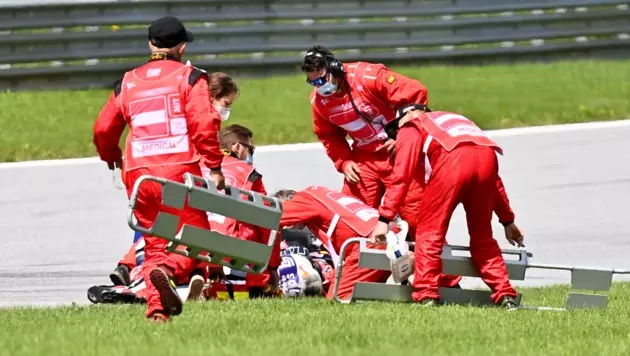
DGKP | Notfallsanitäter | Sanitäter
Diplomierte Gesundheits- und Krankenpflegepersonen (DGKP)
werden im Medical Center eingesetzt. Hier werden Anästhesie-DGKP, OP-DGKP und Ambulanzschwestern benötigt um die Ärzte bei ihren Aufgaben zu unterstützen.
Notfallsanitäter (NFS)
Die Aufgabe der Notfallsanitäter ist neben den allgemeinen Aufgaben eines Sanitäters vor allem die Unterstützung des Notarztes. Hierfür sind sie besonders ausgebildet.
Rettungssanitäter (RS)
Ihre Aufgabe ist die Betreuung des Patienten während des Transportes und die Durchführung lebensrettender Sofortmaßnahmen bis zum Eintreffen des Notarztes.